
Step 1 of 8Inspect
Camera the damaged area and confirm the pipe is structurally sound enough for a point repair.


Structural, No Dig point repair for drain, waste, vent, storm and sewer lines, backed by a 50-year kit replacement guarantee. Repair damaged pipe from the inside, without tearing up what’s above it.
Each kit is sized to the pipe and the repair. Large pipe and long damage can take more than one kit. Your packer carries over from job to job, so the next repair is just another box.
No bottles to pour together. Mix it in the bag, right every time.
NSF tested at more than 9 times the required strength.
 PipePatch Standard kit, 3″ to 24″


No styrene smell and non-flammable. Works inside basements and buildings.
Kit replacement guarantee. See the terms.
Summer resin2.5–4 hrsMost working time. 64°F to 91°F.
Winter resin1–2 hrsFor cold days. 33°F to 73°F.
Rapid resin25–60 minFastest cure. 40°F to 68°F. 3″ to 8″ kits.
Same box, three resins. Pick by the temperature. Plan your cure.
When the damage is in one spot, PipePatch fixes that spot from inside the pipe, without opening the ground above it.
Saved on one lateral repair by Long Beach Utilities, California. The open-cut fix was estimated at $8,000 to $10,000 and meant closing an alley. PipePatch had the line repaired in under half a day.
Source: Long Beach Utilities case studyEstimated share of an open-cut replacement’s construction cost that goes to putting the ground back, not the pipe.
Source: Kaushal, Najafi and Serajiantehrani, University of Texas at Arlington, 2021, citing Najafi 2011Per 3-foot point repair in 6″ to 8″ pipe, as bid by contractors to Rogers Water Utilities, Arkansas, for 2025. The two bids ran $3,000 to $11,500 each, for UV-cured repairs.
Source: Rogers Water Utilities 2025 CIPP bid tabulationCrews: do it in-house and pay for the kit, not the bid. Contractors: add point repair to the work you can bid.
From PipePatch case studies.

Tree roots had damaged a residential lateral and caused backups. Long Beach Utilities repaired the line from the inside with PipePatch Standard, bridging an offset and the break, without closing the alley residents use to reach their garages. The line was back in service in under half a day.
Source: Long Beach Utilities case studyA national railway repaired two concrete culverts with PipePatch Pillow, with more than a foot of water in the pipe. The repair saved the railway more than $100,000.
Source: PipePatch case studyPick what the camera shows to see the right kit. And when point repair isn’t the answer, we’ll tell you.
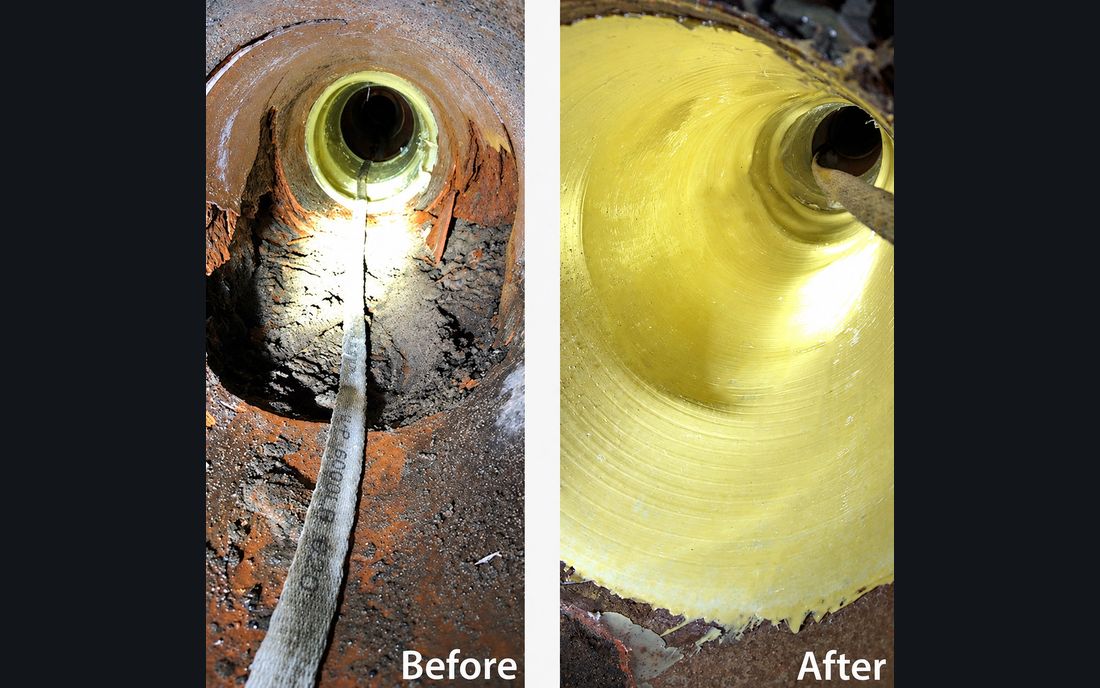
This is what PipePatch is for. Clean the pipe and center the repair on the crack. It cures into a new fiberglass wall that spans the damage.
From a small drain to a large culvert, plus lateral connections. The same kit approach, sized to the job.
The core kit for sewer, storm and drain lines. Summer, winter or rapid resin. Uses a reusable packer.
ElbowRepairs at a bend, where a straight packer won’t follow the pipe. Used with an elbow packer.
XtendRepairs pipe damage that runs for feet, not inches, with a long fiberglass tube and long packers.
MiniFor 1-1/2″ and 2″ lines, with its own small packers.
 Pillow
Large pipe and culverts, with a pillow packer and flow-through options so the line can keep running.
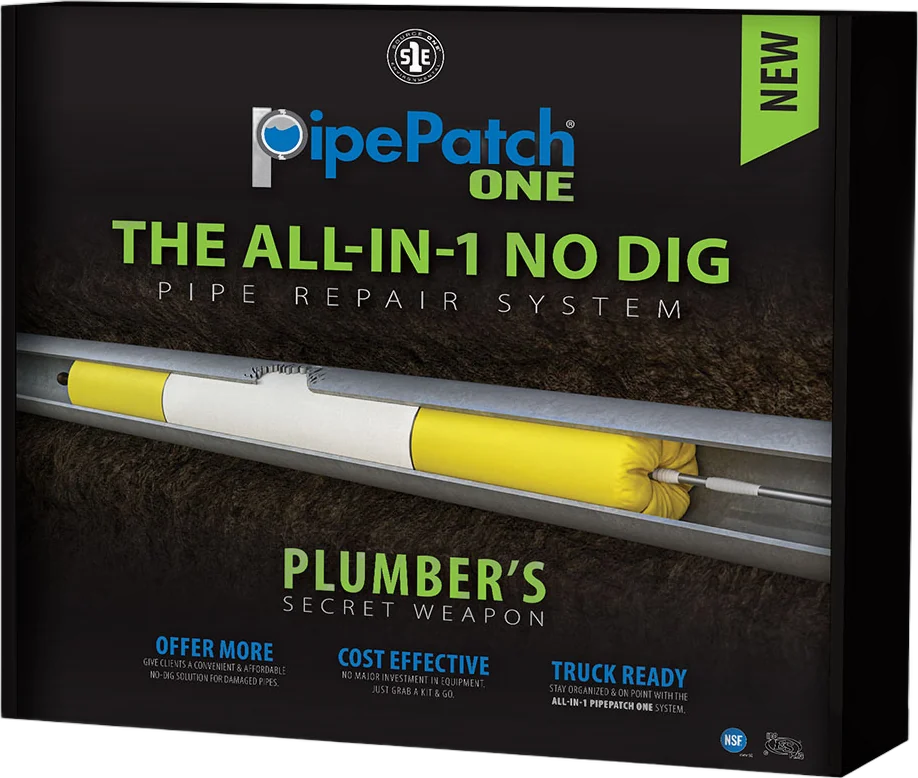
Everything in one box, including a disposable packer. Made for plumbers and hard-to-navigate jobs.
TygerSeals the joint where a lateral meets the mainline, at a tee or a wye. The repair is made from inside the mainline, so you don’t need access to the property the lateral serves. Flow-through packers let the mainline keep running during the cure.

PipePatch’s ICC-ES listing requires factory-trained installers, certified on site. When you buy the PipePatch system, your crew gets certified for free.
Add No Dig repair to the jobs you quote. Show the customer the camera footage before and after. That’s how the job sells.
Eight steps, with the camera at the start and the end.
Camera the damaged area and confirm the pipe is structurally sound enough for a point repair.

Remove all roots, debris and sharp edges, then camera it again. Sharp edges can puncture the packer.

Center the camera head on the damage and tape-mark the cable. Transfer that mark to your push rods.
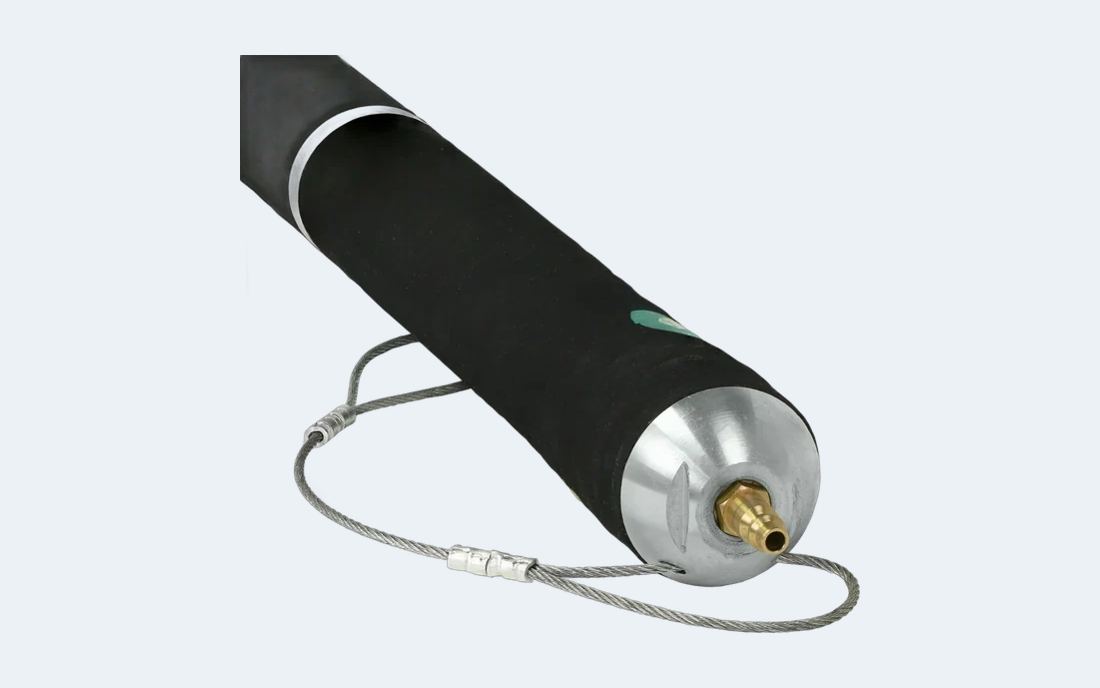
Inflate the packer in a same-size pipe and add 2 psi to the gauge reading. That’s your pack pressure. Then do a dry run to your mark, without inflating.
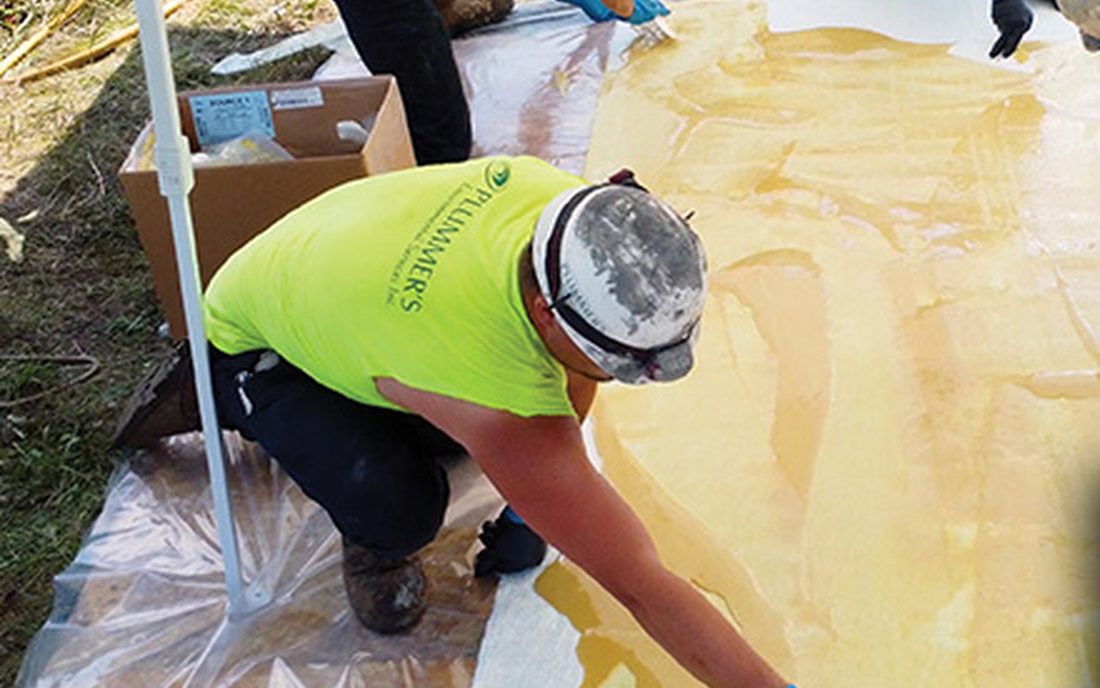
Mix all the resin and record the start time. Saturate both sides of the mat, then fold it with a 1″ overlap.

Fit a new protective sleeve. Roll the patch tight around the packer, secure it with ties and trim the tails.
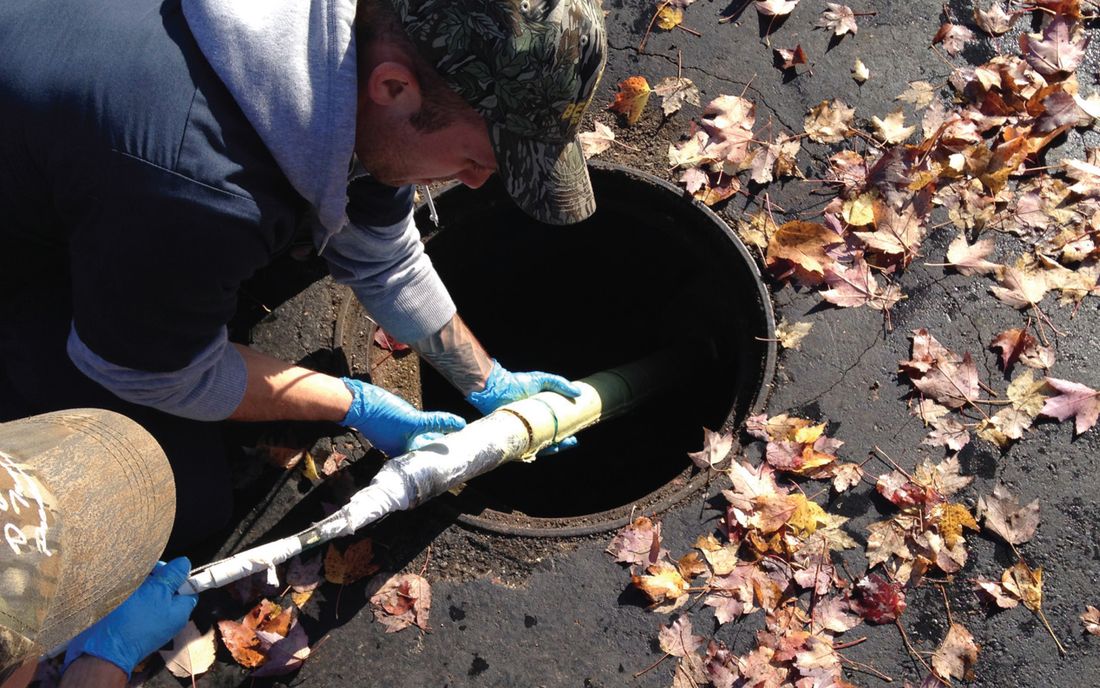
Push to your mark and inflate to your pack pressure. Never exceed the pressure stated on the packer.
Hold pressure for the time on the cure chart. Deflate, pull it out with the pull cable, not the push rods, and camera the repair.
These steps are an overview. Always follow the instructions in your kit.
A PipePatch repair from start to finish.
PipePatch is listed as a cured-in-place (CIPP) point repair system for gravity drain, waste, vent and sewer pipe.
NSF/ANSI 14ASTM F3541Certified to the Uniform Plumbing Code and the International Plumbing Code. Evaluated in cast iron, clay, concrete and plastic pipe, 3″ to 60″.
ICC-ES PMG-1190IPC, IRC, UPC and NPCComplies with the 2009 to 2024 IPC, IRC and UPC and the 2010 to 2025 National Plumbing Code of Canada. Standards: ASTM F1216, ASTM F3541 and NSF/ANSI 14. Pipe 2″ to 72″.
 IAPMO R&T File 9294UPC listed
Listed as a CIPP point rehabilitation system for below-ground gravity flow pipe, to IAPMO IGC 321 and NSF/ANSI 14.
| NSF annual test, May 2026 | Summer resin | Winter resin | Required |
|---|---|---|---|
| Flexural strength | 45,200 psi | 41,000 psi | 4,500 psi |
| Flexural modulus | 1,680,000 psi | 1,610,000 psi | 250,000 psi |
Averages of five specimens each, tested by NSF to ASTM F3541 per NSF/ANSI 14 (fiberglass with summer or winter resin).
| System | Cured-in-place point repair (sectional CIPP), pushed or pulled into place on an inflatable packer |
| Liner | 100% fiberglass, knitted biaxial and chopped strand mat |
| Resin | Two-part silicate resin, ambient cure, styrene-free |
| Resins offered | Summer, winter and rapid |
| Pipe size | 2″ to 72″ (ICC-ES PMG-1190). Mini kits for 1-1/2″ pipe fall below the listed range. |
| Host pipe | Cast iron, clay, concrete and plastic |
| Service | Gravity flow, non-pressure: sanitary, storm and DWV |
Ask for a submittal package with the ICC-ES report, the NSF listing and test results, the IAPMO listing and the warranty terms.
On the job, log the pressure from your test run and your times, then email or text the record to yourself. Before the job, plan the cure with the PipePatch cure charts.
Check the air in the pipe with a temperature gun if you can. In winter it’s usually warmer than the air above ground.
Times are from the PipePatch winter, summer and rapid resin cure charts, by ambient temperature, and start when the resin is mixed. Between chart rows, the planner takes working time from the warmer row and cure time from the colder row. Outside the chart, it shows the nearest row as a limit. Always follow the instructions and safety data sheet in the kit, and confirm the repair with your camera before you put the line back in service.
PipePatch is a No Dig, trenchless cured-in-place (CIPP) point repair system. It repairs a damaged section of pipe from the inside: a resin-saturated fiberglass mat cures in place into a structural repair within the host pipe.
Localized damage in pipe that’s otherwise sound: cracks, holes, joint separation, root intrusion, corrosion and infiltration. It isn’t the fix for sags, collapsed pipe or badly out-of-round pipe. Check your damage.
It’s a structural repair, not a temporary patch, and it’s backed by a 50-year guarantee: if a repair fails, the kit is replaced, as long as the installer was factory trained, used genuine PipePatch tools and components, followed the kit instructions, kept records of the job, and sends in a written report. There’s also a 1-year limited warranty against defects. Ask us for the full warranty terms.
Yes. The resin contains no VOCs or styrene and is non-flammable, so there’s no styrene odor in the building. It’s still a chemical product: wear the gloves in the kit and read the safety data sheet before you start.
1-1/2″ through 72″ across the kit line, depending on the repair system. The ICC-ES listing covers 2″ to 72″, and NSF evaluated 3″ to 60″. See the kit lineup for each kit’s range.
Yes. Point repair and full-length lining can be used on the same line; ask us about sequencing. When the camera shows damage along the whole run, a full-length liner is usually the better buy. Sags, collapsed pipe and bad grade need a dig either way.
Yes. The resin cures in the presence of water, so infiltration and standing water don’t stop the repair. Flow-through packer options let the line keep flowing during the cure. Clean the pipe first: debris under the patch keeps it from bonding to the wall.
Yes. PipePatch’s ICC-ES listing requires installers who are factory trained and certified on site, and the 50-year guarantee requires factory training. Buyers of the system are certified for free. Get certified.
Each Standard kit has pre-measured resin, a pre-cut fiberglass mat, a ground sheet, a resin spreader, gloves, two packer sleeves (one for the dry run, one for the repair), wire or cable ties and tape.
A packer and regulator assembly for the pipe size, push rods, a flex adapter, pull cable, a sewer cleaner, a sewer camera, an air compressor and air hose, a tape measure, wire cutters and safety glasses. A temperature gun is recommended. You also need a short piece of pipe the same size as the repair, to test the packer. PipePatch ONE puts a disposable packer and push hose in the box with the fiberglass and resin.
PipePatch offers packers sized to the pipe and the repair length, with options for bends, long repairs, large pipe and lines that need to keep flowing during the cure. Most are reusable from repair to repair. Not sure which fits your work? Ask us.
The repair seals the joint or crack the roots came in through. Cut the roots back to the pipe wall and clean the line first. There’s no published root-resistance test, so we don’t make a claim beyond that.
Most of it is the cure. At about 68°F, rapid resin cures in 25 to 30 minutes and winter resin in 75 to 100. Add the camera work, cleaning, a dry run and wet-out. Long Beach Utilities had its lateral repaired in under half a day.
For damage that runs for feet in 3″ to 6″ pipe, PipePatch XTEND repairs up to 15 feet at once. Longer runs can take more than one repair placed end to end; ask us how. If the whole line is bad, a full-length liner may be the better buy.
Yes. NSF evaluated PipePatch in cast iron, clay, concrete and plastic pipe.
PipePatch certifications, which open on the ICC-ES and NSF sites, plus the Fernco Infrastructure catalog.
Fernco Infrastructure covers manhole, structure and pipe rehab with three product lines. Add them to your line card to serve municipal and contractor customers. Stock PipePatch, and your customers who buy the system get trained and certified on site, for free.


 Strong-Seal
 SealGuard
 PipePatch